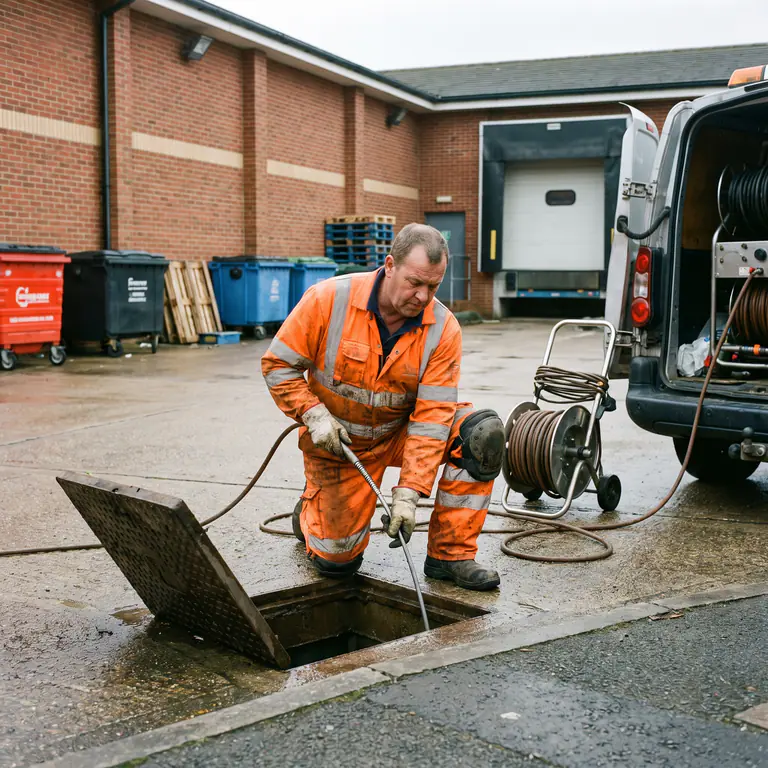
Which premises can be supported?
Commercial drainage needs vary with the building, how it is used and who manages the site. Services can be arranged for:
- Shops, offices and mixed-use buildings
- Restaurants, cafes, pubs and hotels
- Schools, nurseries and community premises
- Warehouses, workshops and industrial units
- Let properties and managed residential blocks
- Care, health and other premises with essential facilities
Site contacts should identify access restrictions, operating hours and any permit or induction requirements when requesting work.
Common commercial drainage problems
High use and varied waste streams can place additional demand on commercial drainage.
- Grease and food residue in kitchen drainage
- Wipes and sanitary waste affecting toilets
- Silt or debris entering yard and surface-water drains
- Repeated blockages in shared or high-use pipework
- Roots, displaced joints or damaged underground drains
- Drainage problems reported across several occupied units
The symptoms, pipe route and site activity should be considered before a clearance or maintenance method is selected.
How is disruption kept under control?
The first priority is to understand which facilities are affected and whether continued use could cause an overflow. The site contact should isolate affected fixtures where possible and keep staff or customers away from wastewater.
The engineer agrees access, the immediate work and the price with the authorised contact. Where the issue cannot be fully resolved during the first attendance, temporary precautions and the next investigation or repair step are explained.
Planned drainage maintenance
Planned maintenance can be useful where usage or previous problems show that particular drainage needs regular attention.
A sensible schedule should be based on site evidence rather than a generic interval. It may include cleaning selected lines, checking known problem areas, inspecting accessible chambers or reviewing grease-management arrangements.
The scope, timing, access and record requirements should be agreed for each site.
Support for landlords and property managers
A clear approval route helps managed work proceed efficiently. The person requesting attendance should confirm who can authorise costs, how engineers gain access and which tenant or site representative can describe the problem.
For recurring faults, a CCTV survey may help distinguish a local blockage from a structural issue or a problem affecting shared drainage. Responsibility guidance can then be considered alongside the evidence.
Frequently Asked Questions
What types of commercial premises do you work at?
Enquiries are accepted from shops, offices, hospitality venues, schools, managed residential buildings, industrial units and other organisations. Site requirements are checked before attendance.
Can you help with an urgent commercial blockage?
Yes. Explain which facilities are affected, whether wastewater is escaping, the site access arrangements and who can approve the work. Current attendance availability can then be confirmed.
Do you provide planned drainage maintenance?
Yes. A planned scope can cover selected lines or known problem areas. The frequency should reflect site use, previous blockages and inspection findings rather than a generic schedule.
Can you help with grease-related drainage problems?
Grease and food residue can be assessed and suitable drainage lines may be cleaned. The site should also review waste handling and any grease-management equipment to reduce recurrence.
Can landlords and property managers arrange work?
Yes. Please provide the property details, tenant or site contact, access information and the name of the person authorised to approve the work.